Across the world, companies are developing quantum computers with the potential to unlock solutions to some of humanity’s most pressing problems. These increasingly complex systems rely on equally sophisticated hardware and software, and more than half of these companies turn to Quantum Machines for those needs.
A leader in quantum control, Quantum Machines builds the essential hybrid control solutions that companies need to ensure their quantum processors, classical computers and real-time controls work together.
Now, Quantum Machines is establishing a flagship hub at the Illinois Quantum and Microelectronics Park (IQMP). Their focus on creating integrated infrastructure aligns with the collaborative nature that defines the IQMP.
In our latest Deep Dive, the team at Quantum Machines explains why a unified strategy is critical to move quantum applications from a futuristic dream into a commercial reality.
What makes the IQMP the right place for Quantum Machines’ next phase of innovation?
The IQMP brings together many of the ingredients quantum companies need in one place: strong research institutions, engineering talent, national lab infrastructure and a growing ecosystem focused on turning quantum technologies into practical systems. For Quantum Machines, this is especially relevant because our platform connects quantum hardware, real-time control, software and classical computing infrastructure. As quantum systems grow more complex, environments like the IQMP are essential to enable close collaboration across industries and sectors.
What sets your platform apart from others on the market?
Quantum Machines was built around the idea that creating useful quantum computers is not simply a hardware challenge. It also requires tight coordination between quantum processors, control systems, software and classical computing resources. Our orchestration platform brings these elements together in a unified infrastructure that works across multiple qubit modalities. We focus on reducing friction in the development process by lowering latency, accelerating iteration cycles and helping researchers operate intricate systems in a scalable and reproducible way.
In simpler terms, the platform creates harmony across software and hardware to optimize speed and performance, eliminate setbacks and bring ideas to life.
What potential application of quantum technology excites you the most?
One of the most exciting aspects of quantum computing is its potential to simulate nature. That could fundamentally change how we develop new materials, understand chemical systems, optimize industrial processes and accelerate breakthroughs across energy, pharma, manufacturing and climate technologies. More broadly, quantum is pushing us to rethink how computation can be performed and how increasingly complex systems can be controlled.
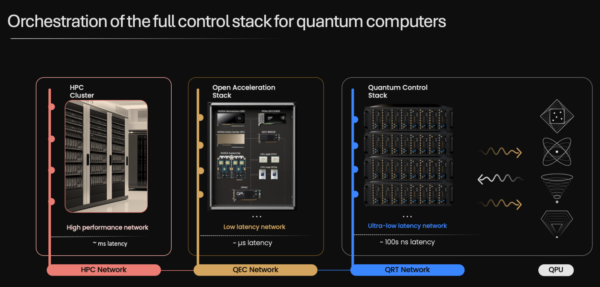
How do your innovations — from quantum orchestration to the OPX1000 and the Open Acceleration Stack — work together to advance the industry? Why do they matter right now?
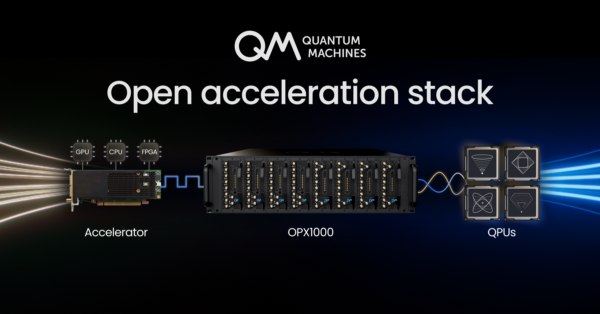
The industry is moving away from isolated experiments toward larger-scale quantum systems that work alongside classical computing infrastructure. That transition requires much tighter integration between the two. Our hardware (the OPX1000) provides ultra-fast real-time control and feedback, while our orchestration software and Open Acceleration Stack helps integrate classical and quantum computing resources into a more unified workflow. Put together, our products help researchers automate complex workflows, run more adaptive experiments and prepare for demanding workloads such as quantum error correction and large-scale system operation.
As quantum computing moves toward larger, more practical systems, our hardware and software help connect quantum and classical computing systems, automate complex experiments and prepare for the next generation of quantum technology.
Quantum Machines is part of the IQMP’s On-Ramp, a program to allow tenants to begin operations in Chicago while the Park is under development. Why did you join On-Ramp?
The On-Ramp program reflects something we believe strongly: scaling quantum computing will require ecosystems, not isolated companies. The IQMP is creating an environment where startups, researchers, national labs and industrial players can collaborate closely. Quantum Machines is aligned with the Park’s vision for what infrastructure and partnerships are needed in the next phase of the industry.
What will Quantum Machines gain by joining Illinois’ quantum ecosystem?
We’ll gain access to a highly interdisciplinary ecosystem. Quantum computing depends on all kinds of experts – physicists, microwave engineers, software developers, cryogenic experts, HPC specialists and systems engineers – working together. Illinois has exceptional depth across many of those areas, as well as strong academic and national lab connections. We’re also excited to see growing momentum around workforce development and commercialization.
How are you engaging students or early-career professionals who may not yet see themselves in quantum?
One of the biggest misconceptions about quantum computing is that it is only for physicists. In reality, the field needs software engineers, hardware engineers, control specialists, manufacturing experts, data scientists, designers and people from many other disciplines. We believe awareness and education need to start early— not only for future quantum researchers, but for the broader generation that will eventually work in industries transformed by quantum technologies. Making quantum more accessible, practical and connected to real-world systems is an important part of that effort.
What’s one word that describes Quantum Machines?
Orchestration.
Finish this sentence: “Quantum technology will change the world by…”
…allowing us to solve classes of problems that are fundamentally beyond the reach of classical computing alone.