A Deep Dive with Diraq
As the global quantum computing industry races to develop quantum computers that deliver real-world value, the biggest hurdle isn’t just building a working qubit. It’s building millions of them, reliably and affordably. That’s the challenge Australian quantum computing company Diraq was built to solve.
Diraq is pioneering a unique approach to utility-scale quantum computing built on silicon “spin qubits” – tiny quantum bits encoded in silicon, made using the same manufacturing processes already used to build the computer chips we see every day. That means Diraq can tap into the semiconductor industry’s decades of experience instead of inventing an entirely new way to build hardware.
Diraq’s utility-scale computers are designed to cost less than a dollar per qubit and perform one million error-corrected operations per minute – with a roadmap charting a course to millions of qubits by 2031, and tens of millions by 2033.
In May 2025, Diraq announced plans to become a tenant at the Illinois Quantum and Microelectronics Park (IQMP), initially operating out of the On-Ramp program at mHUB while the campus is under construction.
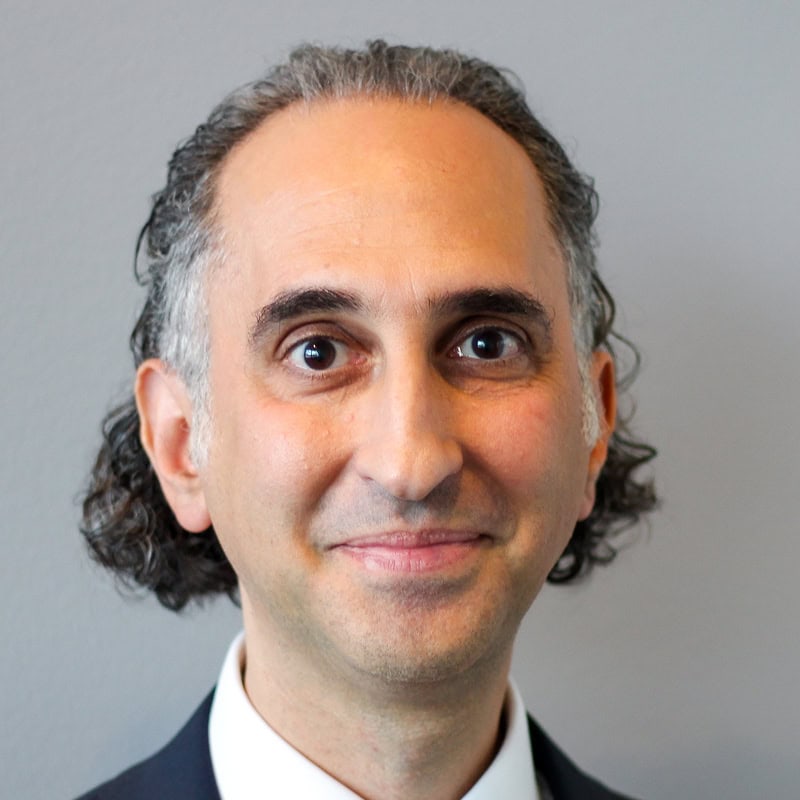
For our latest Deep Dive, we sat down with Diraq’s Founder and CEO, Andrew Dzurak, to discuss the company’s silicon-based approach, its growing footprint in Illinois and what excites him most about the future of quantum computing.
What makes the IQMP the right place for Diraq’s next phase of innovation?
Diraq is entering a phase in which access to advanced infrastructure is increasingly important, and the IQMP provides an environment purpose-built for companies developing next-generation quantum technologies. The combination of dedicated laboratory facilities, cryogenic infrastructure, long-term room for growth and a shared quantum innovation campus makes the IQMP a compelling place to expand our U.S. R&D footprint.
Just as importantly, the IQMP reflects a long-term commitment to building a world-leading quantum hub in Illinois. Being part of that effort allows Diraq to establish capabilities today while positioning for future growth as we advance our silicon-based approach to utility-scale quantum computing.
What does Diraq gain by joining Illinois’ quantum ecosystem?
Illinois gives Diraq access to an extraordinary concentration of quantum expertise. Between the national laboratories, leading research universities, innovative quantum companies and major public investment in the sector, there’s a depth of capability here that few places can match. We’re able to tap into world-class talent and participate in a community that’s helping shape the future of quantum computing.
For a company building utility-scale quantum computers, those connections matter. They help us accelerate the development of the silicon spin-qubit technology that underpins our roadmap.
What sets Diraq’s approach to research and discovery apart? What makes the company’s platform different from others on the market?
We’ve built our strategy around scalability from day one. Many quantum computing architectures have demonstrated impressive scientific results, but the challenge is turning those results into systems that can be manufactured economically and deployed at scale.
The path to utility-scale quantum computing starts with choosing a technology that can feasibly grow from a handful of qubits to the millions that will be required for commercially valuable applications.
Diraq’s approach is based on silicon spin qubits built using CMOS-compatible manufacturing processes — the same techniques that are used to fabricate today’s computer chips. Rather than creating an entirely new manufacturing ecosystem, we’re leveraging decades of investment and expertise from the global semiconductor industry.
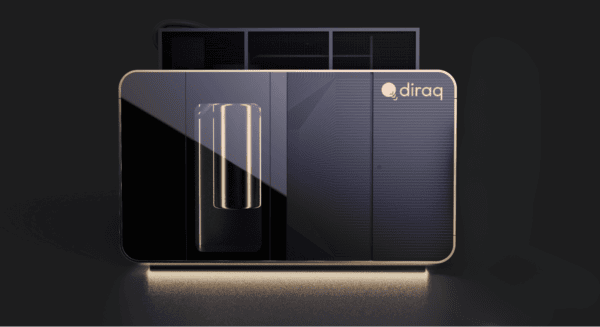
This enables us to manufacture extremely high-density chips, which in turn allows us to design compact, deployable systems with millions of qubits in a single rack-sized unit. In our view, that’s a crucial requirement for utility-scale quantum computing, because a technology that requires ever-increasing amounts of hardware and physical space to scale becomes difficult and expensive to deploy broadly.
Ultimately, we’re working toward a future where quantum computers are not rare scientific instruments, but practical machines that can be deployed wherever they’re needed. By combining silicon spin qubits with the manufacturing power of the semiconductor industry, we’re pursuing a path to quantum computers that are ultra-compact and capable of delivering real-world value at scale.
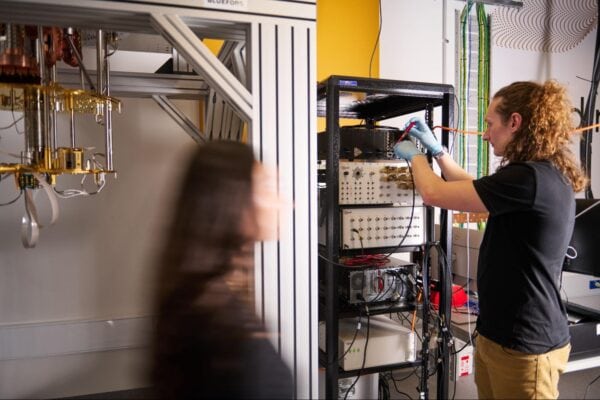
In 2025, Diraq and Fermilab’s collaboration to develop an ultraprecise quantum sensor was awarded the Quandarum project by the U.S. Department of Energy Office of Science. Where is that project today and how has being part of the Illinois ecosystem made that collaboration easier?
The Quandarum project is exciting, because it complements Diraq’s efforts toward utility-scale quantum computing, and demonstrates the unique capabilities of quantum technologies. Together with Fermilab, we’re exploring how silicon spin qubits can be used as extraordinarily sensitive quantum sensors, opening up new ways to study fundamental physics that would be difficult to access with conventional technologies.
When the collaboration began, we expected much of the measurement work to happen in Sydney. Today, alongside our measurement engineering expertise in Australia, we have three team members based in Chicago working closely with Fermilab, which has made collaboration much more direct and efficient.
Being part of the Illinois quantum ecosystem means our researchers can engage regularly with Fermilab scientists, access local facilities and expertise, and move experimental plans forward much faster than would be possible from the other side of the world. It’s a great example of how proximity matters in cutting-edge research, and we’re very excited about what that will enable as the project progresses.
Diraq is part of the IQMP’s On-Ramp program, which allows tenants to begin operating in Chicago while the Park is under construction. How has On-Ramp accelerated the company’s ability to build a foundation here in Illinois?
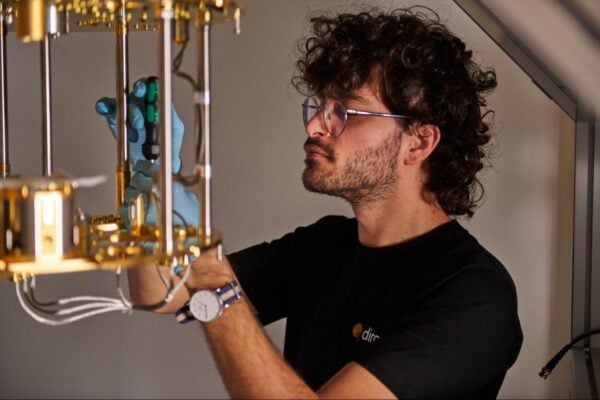
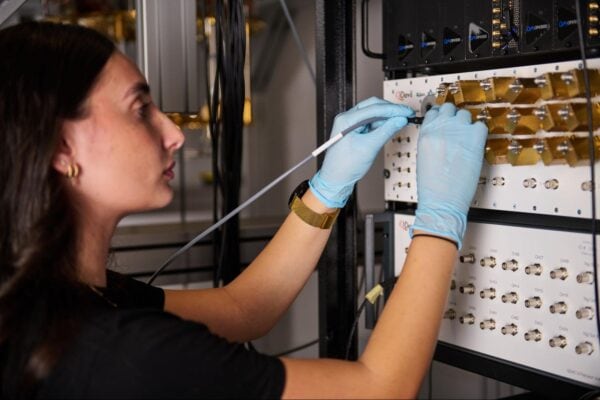
On-Ramp let us skip the wait and start building in Illinois right now, rather than sitting on the sidelines until the permanent IQMP campus is complete. We moved into mHUB, stood up a working lab,and are already running experiments there, including qubit measurements, cryo-CMOS testing and component test and verification. That head start matters enormously in a field like quantum computing, where progress compounds quickly once you have people and equipment actually running tests.
mHub has allowed us to grow our Illinois team rapidly, with six team members already onsite, and plans to grow over the next 12 months as our work here expands. It’s also fostered our existing relationships with partners and given us proximity to new institutions. By the time the permanent campus is ready, Diraq will already have real momentum in Illinois.
What potential application of quantum technology excites you the most?
Some of the most exciting applications for me are in climate and energy, especially materials discovery. Better batteries, more efficient catalysts, improved carbon-capture materials — these all come down to modeling atoms and molecules with a precision that classical computers just can’t reach. Quantum computers are built for exactly that kind of problem.
Quick Hits:
- One word that describes Diraq: Boring. (This might sound like an odd answer, but for more context, read our Substack article: Diraq’s Quantum Computers Are Boring.)
- Finish this sentence: “Quantum technology will change the world by…” Helping us understand and solve problems that are beyond the reach of today’s computers, unlocking discoveries in medicine, materials, energy and science that could improve millions of lives.
For example, it could help scientists design new drugs and better understand diseases like cancer, accelerating the development of life-saving treatments.
In space exploration, it could uncover advanced materials, batteries and fuels to make future spacecraft lighter, more efficient and capable of traveling further. It could also optimize complex transport and logistics networks across vehicles, freight and infrastructure, easing congestion, lowering costs and improving efficiency.
And there’s a huge opportunity in climate and energy, from identifying new materials for cleaner energy systems to developing carbon capture technologies that could help address climate change.