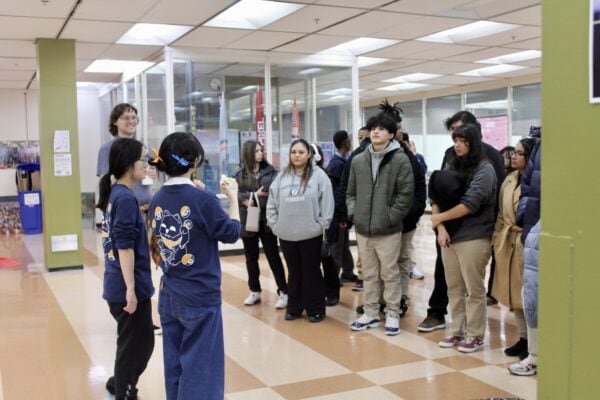
Earlier this year, students from the Southeast Side’s St. Francis de Sales High School arrived at Whitney Young High School’s campus buzzing with energy. They had been part of science fairs and math bowls before, but this – Science Olympiad’s Chicago Regional Competition – felt different.
Science Olympiad is designed to turn curiosity into confidence. Structured like a sport, the program helps young people build a foundation in STEM subjects while fostering identity and pride in their work.
This school year, the Illinois Quantum and Microelectronics Park (IQMP) and partners including P33, Claretian Associates and the Chicago Quantum Exchange (CQE) sponsored six Southeast Side schools to create their own Science Olympiad teams. In addition to St. Francis de Sales, other neighborhood schools getting involved include Thomas Hoyne Fine Arts Elementary School, Robert A. Black Magnet Elementary School, Ninos Heroes Elementary School, James Madison Elementary School and Bowen High School.
While students aren’t required to commit to becoming quantum engineers, participants learn how to build durable skills that translate across industries, like critical thinking, collaboration and resilience.
By strengthening foundational STEM concepts, the competition encourages kids from all walks of life to consider pathways in emerging industries. Science Olympiad is one of several educational programs the IQMP has invested in to prepare young people, particularly those in the neighborhoods surrounding the Park, to participate in the quantum workforce of tomorrow.
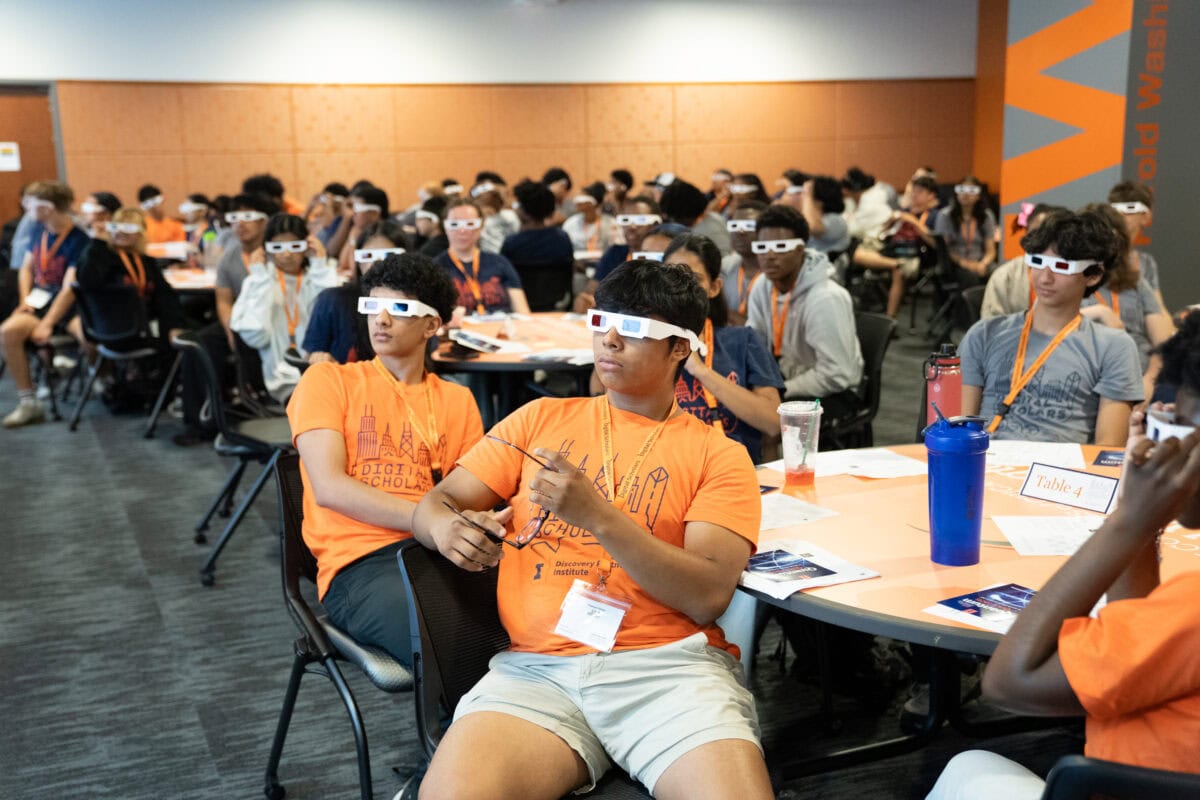
During the event at Whitney Young, the St. Francis de Sales students joined teams moving quickly between 23 events spanning physics, chemistry, materials science and engineering. In every corner of the room, participants were building, testing and problem-solving. For many, it was their first time seeing science come alive in such a hands-on way.
“I’ve been working to get a group of sophomore girls excited about my subject, and Science Olympiad provided the match to ignite those embers,” said Jane Healy, a biology, anatomy and physiology, and physics teacher at St. Francis de Sales.
“These girls were inspired by the experience,” Healy said. “They literally cannot wait until next year.”
“Programs like Science Olympiad are helping students see that their skills have value, that there is opportunity ahead, and that they can adapt to whatever comes next,” said Megan Hougard, Chief of College and Career Success for Chicago Public Schools (CPS).
In that sense, they are not just preparing for the future – they are becoming future-ready.
Connecting to Chicago’s Quantum Future
As the IQMP helps establish Illinois as a leading destination for quantum innovation, building a strong, local talent pipeline is essential to sustaining that growth. Programs like Science Olympiad play a critical role in sparking interest, developing skills and ensuring the next generation is ready to participate in this emerging field.
“Everyone in the Chicago business community is buzzing about the new Quantum Cohort teams,” said Jenny Kopach, CEO of Science Olympiad. “There’s tremendous support for making sure these students and their science teachers get everything they need to be successful, from supplies to transportation to mentoring.”
For many students, advanced fields can feel out of reach. Science Olympiad helps close that gap by making science approachable, giving students the tools to explore complex ideas without intimidation.
“Technology evolves rapidly, so our students need to build skills that can support a range of future careers, some of which may not even exist yet,” Hougard continued. “In Science Olympiad competitions, students are tackling real-world challenges and building critical thinking skills that allow them to remain adaptable as new opportunities emerge.”
CPS is working closely with IQMP partners to align student pathways with the full range of workforce needs – from technicians and operators to future researchers – that the Park will require.
“Our role is to prepare all students for postsecondary success,” Hougard added. “STEM pathways start early and extend through advanced coursework and career exposure.”
Why It Works
For educators like Dr. Roni Facen, principal and CEO of St. Francis de Sales, the value of Science Olympiad goes far beyond academics.
“We have seen firsthand how powerful this experience is for our students,” said Facen. “Students are not just learning concepts in a classroom – they are applying them, testing ideas, collaborating with peers and developing confidence in their ability to solve complex problems…Students take ownership of their learning and develop a sense of pride in representing their school and community.”
As the IQMP rises in South Chicago, partners are collaborating to help local residents – especially young people – feel a sense of ownership over future career paths in quantum and STEM. “Programs like Science Olympiad are critical in expanding access and exposure, particularly for students who may not otherwise have these opportunities,” Facen said. “It is helping to build not only knowledge, but belief in what is possible for their futures.”
When Healy brought 19 students to observe their first tournament, the impact was immediate and deeply personal.
“Another student told me that he really wanted to tackle entomology next year. This from a kid who’s on the basketball team and lives and breathes sports,” she went on. Healy added. “The breadth of subject material allows students at all levels to feel there is a place for them in science. That is beyond beautiful to me.”
A Pipeline for What’s Next
As the IQMP and its partners continue to invest in the future of innovation and advanced technologies, programs like Science Olympiad are helping ensure that local students are part of that future.
“The generous funding for Science Olympiad is allowing schools in communities surrounding IQMP to expand hands-on learning,” Hougard said. “It’s bringing together industry, higher education and STEM education to ensure students have access.”
That alignment creates pathways, strengthens communities, and cultivates a pipeline of talent not just for today’s jobs but for tomorrow’s opportunities.
The students who once stood on the sidelines are no longer just watching.
“We are grateful to be part of this work and excited to continue growing these opportunities for our students,” Facen said.