More than 30 years after US Steel closed the doors of its South Works location, steel is rising once again as the site transforms into the global destination for quantum innovation.
For more than a century, US Steel South Works stood as a cornerstone of Chicago’s industrial might, employing up to 20,000 workers at its peak. When it closed in 1992, the South Chicago community surrounding the steel mill lost jobs, investment and momentum. The site remained dormant for more than three decades.
“We lost a lot of the industry in South Chicago, and a lot of the family structures and things we had broke down at that time,” said Captain Dwayne Digby, a community non-profit leader at the Southern Shore Yacht Club Foundation. “Now it’s time to rebuild them again.”
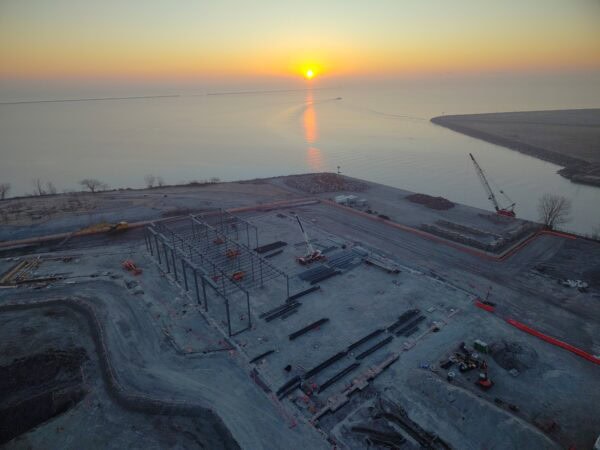
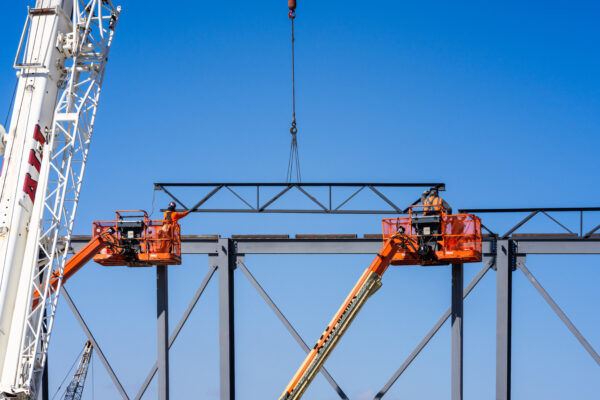
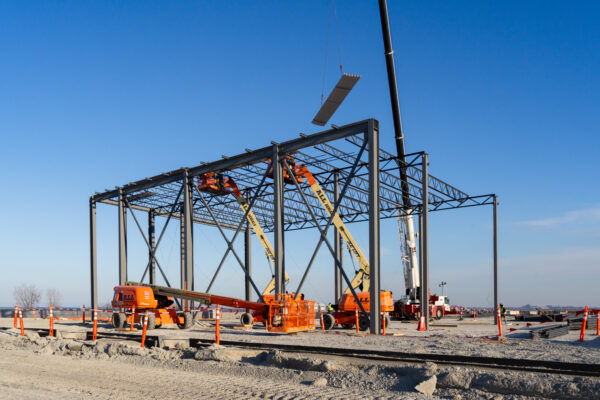
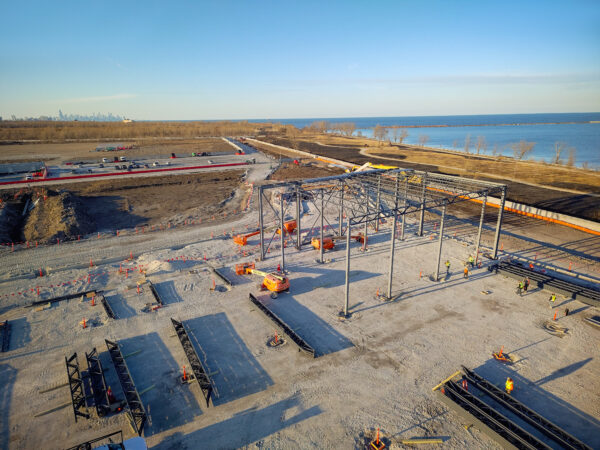
The Illinois Quantum and Microelectronics Park (IQMP) marks a turning point. Since breaking ground last fall, the Park is now rapidly taking shape on the former industrial site along Lake Michigan’s shore. The most visible progress so far is the installation of structural steel for anchor tenant PsiQuantum’s state-of-the-art facility, where the company will build the first fault-tolerant, utility-scale quantum computer in the US.
Once complete, the PsiQuantum facility will consist of approximately 500 tons of steel. In a powerful symbol of continuity with the site that once helped build skylines across America, that steel is being fabricated by Affordable Welding Iron Works, a company located just two blocks from the site.
“South Chicago manufactured the steel that helped build the nation. Now, the IQMP is redefining what this site and this region can be—a global leader in quantum innovation with the potential to advance real-world applications and make life better for everyone,” said Meghan Dyer, Assistant Director of Design and Construction for the IQMP.
Once the Park is fully operational, it will create thousands of jobs ranging from system operators to site managers, logistics workers to scientists, security personnel and more. As the IQMP becomes a home for companies around the world, it will also generate long-term economic development for the surrounding area. As quantum technology itself advances, it will have the power to accelerate innovation and growth in a range of industries that are essential to Illinois’ economy, like biomanufacturing and agriculture. South Chicago will be at the very center of that progress.
“This transformation of the former US Steel South Works site into the Illinois Quantum and Microelectronics Park places the South Chicago community as the leader of quantum computing,” said Ald. Peter Chico (10th Ward) in a statement when the Park officially broke ground. “We look forward to this investment helping to build our community, as US Steel did for many years.”
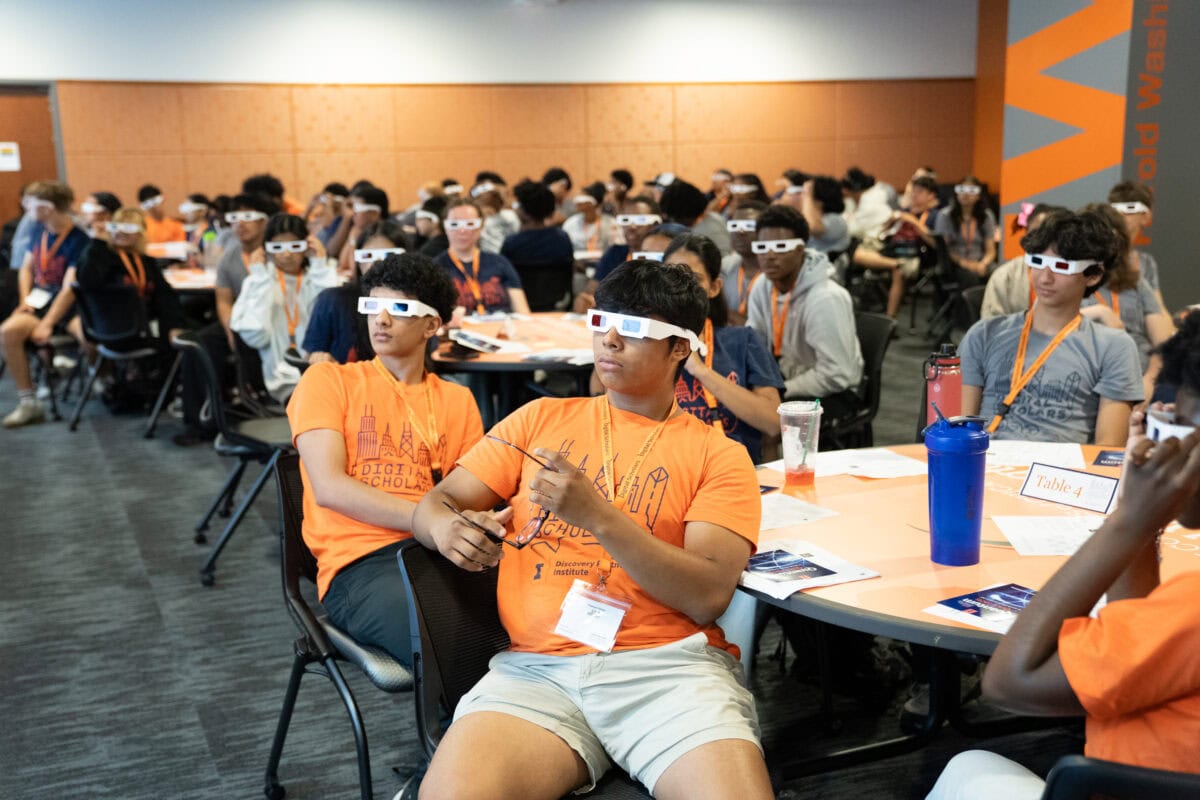
At the same time, the IQMP and its partners are working to create excitement and awareness about the industry for K-12 students through informal science education programming and direct engagement with Chicago Public Schools (CPS). For example, in February 2026, the Discovery Partners Institute (DPI) hosted an event for 70 CPS teachers to introduce quantum technology and incorporate it into lesson plans. The IQMP is committed to ensuring students and teachers, particularly in South Chicago, have access to emerging technologies and future career pathways.
“I want something different for this generation and I think the IQMP can be that change,” said Dr. Roni-Nicole Facen, principal and CEO of St. Francis de Sales High School. Her students are participating in the Science Olympiad program, designed to build foundational STEM knowledge, introduce advanced fields in accessible ways, and encourage young people to explore industries they may not have previously considered.
“It’s the possibility for them to look toward the future and go, ‘there are all these careers that I never knew existed, and now I get to materialize that right in my backyard.’”
Behind the site’s transformation of these 128-acres is a complex, highly coordinated effort spanning design, construction, infrastructure and community engagement.
Dyer emphasized how the design team is committed to honoring the site’s history in every phase of the project. From early feasibility studies to ongoing design development, they have prioritized incorporating elements that reflect South Works’ industrial past. That includes exploring materials inspired by the site itself and drawing on the visual language of steel production in architectural forms and layouts.
“The goal is not to replicate the past, but to acknowledge it—creating a campus that feels rooted in its history while looking firmly ahead,” Dyer said.
That philosophy extends to the landscape, too. Plans call for native plants that reflect Illinois’ identity as the Prairie State, helping the site reconnect with its natural environment while creating a space that is distinctly local.
“This land has not done anything for us in the last 30 years,” said Malki Brown, President of the Euclid Block Club in South Chicago. “It’s time for new development. Let’s give it a try – let’s do something different.”