
As the Illinois Quantum and Microelectronics Park (IQMP) rises on Chicago’s South Side, Illinois continues to cement its position as a global leader in quantum innovation. An important aspect of that is the work of our institutions of higher education, an essential part of the state’s expanding ecosystem. Local colleges and universities are playing a pivotal role in building the workforce, research capacity and talent pipeline needed to sustain the quantum industry’s long-term growth.
Our Quantum on Campus series showcases the institutions, educators and students shaping the future of quantum and advanced manufacturing in Illinois. We’re highlighting emerging career pathways, innovative workforce programs and strategic partnerships that are designed to ensure opportunities in this rapidly growing industry are both accessible and inclusive.
We continue the series with Illinois Wesleyan University (IWU) as they build and launch a full quantum curriculum for undergraduates, intentionally designed to engage students during their freshman year.
An Early On-Ramp to Quantum
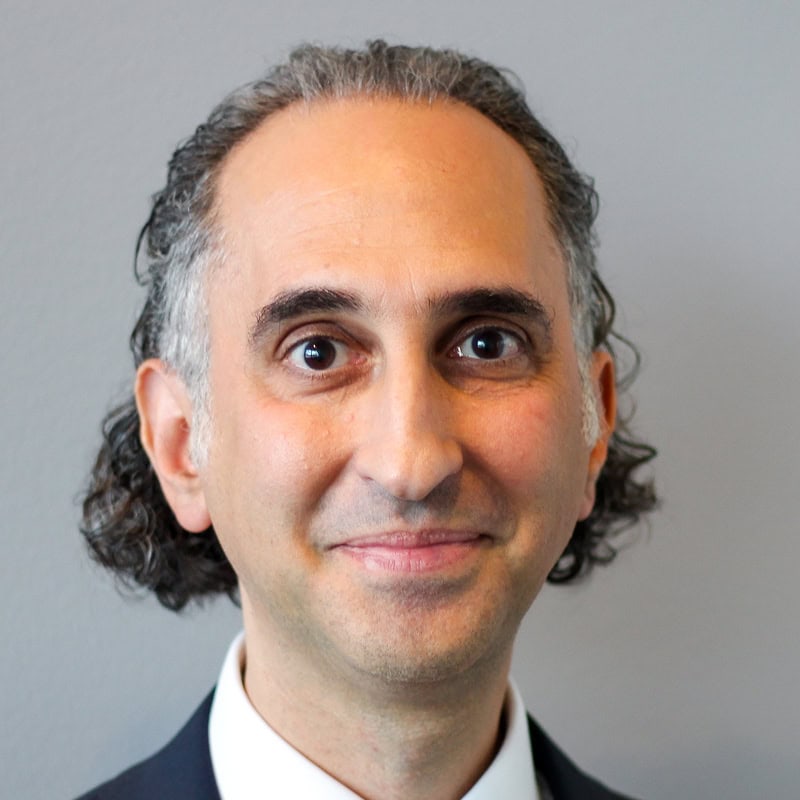
Dr. Narendra K. Jaggi, professor and chair of the Physics Department at IWU, points out that many universities do not offer their first serious quantum mechanics course until junior or senior year, and only after several prerequisite physics and math classes.
“By then, students who might have been interested often never even get to experience the subject,” he said.
Jaggi, director of IWU’s new Fisher Center for Interdisciplinary Quantum Science & Engineering, designed an entry point course that any motivated student can take. It introduces core quantum concepts in an accessible way and moves quickly into meaningful depth to prepare students for 300‑level work, he said.
Students also get hands-on exposure to quantum ideas, tools and career paths through the Fisher Center. One of those students is rising junior Angel Hearns, a chemistry and physics double major from Mokena, Illinois, who hopes to add a concentration in quantum science and technology.
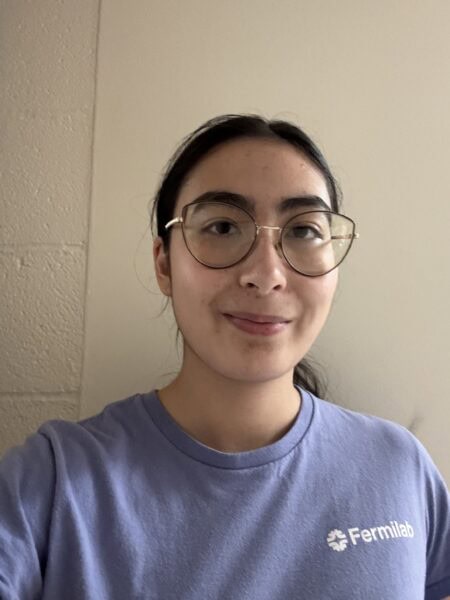
Angel Hearns
Angel took what she calls “Professor Jaggi’s baby quantum class” and helped beta test the course’s new lab components over the summer. The math is intentionally approachable.
“The course is more focused on understanding the fundamental concepts,” Angel explains, “so everyone can take the quantum course.”
Jaggi intends to move away from a single pipeline that everyone must pass through and instead build multiple, flexible points-of-entry into quantum.
“These pathways are designed to meet students where they are: some arrive from community colleges, some as physics, computer science, or chemistry majors, and others discover quantum as juniors or even in their very first semester,” he said. “Wherever a student steps onto the path, the goal is to guide them toward a meaningful career in the emerging quantum economy.”
Learning Quantum Chemistry on Classical Computers
IWU’s quantum curriculum isn’t limited to theory. It’s tightly connected to real tools and emerging applications, especially in chemistry.
This summer, Angel worked with Professor Jaggi on quantum chemistry using classical computers and a professional-grade software package called ORCA. With ORCA, Angel learned to calculate molecular orbitals, total energy of molecules, dipole moments and vibrational frequencies.
“It was mind-blowing. What impressed me the most is how accurate the quantum chemistry calculations can be and how accurately they can predict reactions,” she said. “Maybe in the future, you can figure out which reactions will work and which won’t on the computer instead of going to a lab first.”
Angel’s work over the summer will feed directly into IWU’s course development. She has been reviewing and editing materials for Quantum Chemistry Using Classical Computers, a new course Jaggi is designing, and helping refine labs and lectures so that future students can follow them clearly.
Building Certificates and Multiple Pathways
The Fisher Center is not just adding scattered quantum electives. It’s intentionally building diverse pathways for students from different majors and backgrounds, Jaggi said.
Each path will be structured around a five-course model: a broad introductory course, three 300-level quantum courses in a specific focus area, and an internship or research experience with an external partner. Together, these classes form a certificate that is meant to prepare any interested student for a career in that area of quantum science and technology.
“The five-course sequence actually becomes a certificate that is an outstanding preparation for a career in that field. That’s where the IQMP comes in. It would allow us to place our students in internships in the appropriate area.”
The first certificates being developed include quantum chemistry and integrated photonic engineering, which focuses on generating, controlling, manipulating, and detecting light (photons) to perform useful functions — much like electrical engineering does with electrons. The photonic engineering certificate focuses on both the science of integrated photonics and the engineering required to design, build and test these devices. It’s aimed at students who want to sit at the intersection of physics, engineering, next-generation communication and sensing technologies.
Jaggi said his goal is to expand to at least four certificates covering quantum finance, algorithms, sensing and metrology.
Beyond STEM: Interdisciplinary and Ethical by Design
One of the Fisher Center’s core values is inclusivity—both in who can participate and in how quantum is connected to the wider world, Jaggi said.
“IWU has long welcomed students who pair physics with fields like art or music, and the quantum curriculum is a natural extension of that culture,” he said.
The Center’s faculty is also intentionally building ethical and societal reflection into its programs. Every certificate will require at least one course on the societal and ethical implications of emerging technologies. A historian of science and technology will help students understand how past technologies reshaped society—and what that might mean for quantum.
Jaggi is candid about why that matters: “These conversations didn’t happen early enough with artificial intelligence. I want quantum science and technology to be different.”
A Network of Real-World Partners
IWU connects students with a broader Illinois quantum landscape that includes the Chicago Quantum Exchange and its Open Quantum Initiative (OQI), national labs like Argonne and Brookhaven, and the Construction Engineering Research Laboratory (CERL) of the U.S. Army Corps of Engineers.
Students are already landing OQI fellowships and internships at places like CERL and Argonne because they arrive well prepared from their coursework and mentoring, Jaggi said.
“The goal is not to compete with major research universities and national labs, but to prepare undergraduates to join and strengthen that larger ecosystem—as researchers, engineers, analysts, or professionals who understand both the technical and societal dimensions of quantum technologies.”
Keeping It Simple (or, Simple Enough)
For students who feel intimidated by quantum—or by science in general—Angel has some advice:
“Everything can be broken down into fundamental concepts. Once you understand them, you can continue learning them. It’ll get easier. ”
Her own path at IWU shows what that support looks like: early exposure via an inclusive introductory quantum course, close advising and summer research with Professor Jaggi, and the chance to help shape new courses for the students who will follow her.
“As I research more and more—whether it’s quantum calculations or qubits—whenever I get deeper into it, it gets a lot more interesting,” she said. “It’s amazing.”
To learn more about the Fisher Center and IWU’s quantum curriculum, visit:
https://www.iwu.edu/fisher-quantum-center/index.html