Across the country, technology is evolving and two words are starting to pop up more and more: “data centers.” As artificial intelligence (AI) revolutionizes daily life, the presence of giant buildings full of computers are bringing new concerns. While conversations around these new developments dominate headlines, we’ve been asked outright, “is the IQMP a data center?” The answer is unequivocally no. The Illinois Quantum and Microelectronics Park (IQMP) is not a data center and will not house one onsite. The IQMP is a first-of-its-kind campus built for quantum technology and innovation. Quantum computing is a new kind of technology that will give scientists and engineers a dedicated tool to tackle problems that are beyond the reach of today’s most powerful computers, with applications in medicine, clean energy, materials, the environment, finance, agriculture and other critical industries.
Quantum Computing is Something Entirely New
Data centers are warehouses full of conventional supercomputers that use the same fundamental technology that is inside your laptop or phone, scaled up in a huge way. They store, process and move massive amounts of data and information to perform calculations at high speeds, which has made them the backbone of AI technology.
Though often compared to classical computers, quantum computers are an entirely different kind of machine, built on the principles of quantum physics – the science that governs how the universe behaves at the smallest scales. As the industry publication Quantum Insider puts it: “Quantum and classical computers are not competing versions of the same thing…They are fundamentally different computational models, each suited to different types of problems, operating according to different physical principles, and facing different practical limitations.1”
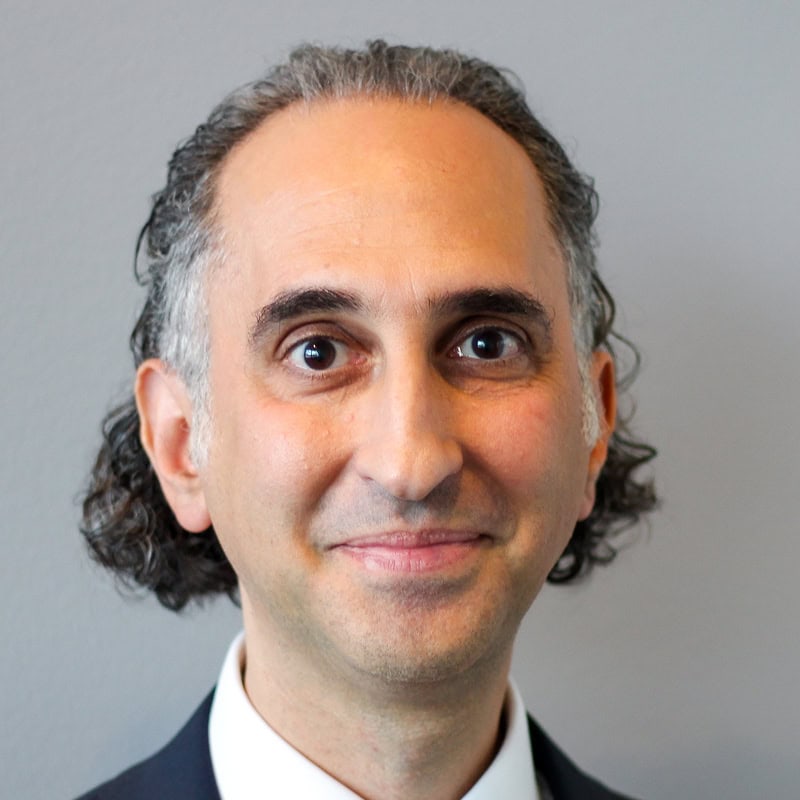
“We currently use supercomputers to calculate these really hard problems as best as possible, but they’re slow at it, even with the most cutting-edge AI techniques,” said Brian DeMarco, Chief Technology Officer of the IQMP and a professor at the University of Illinois. “So, we’re exploring how quantum technologies might make those answers easier and more reliable to find.”
For example, take pharmaceutical development. Today’s supercomputers struggle to accurately predict how molecules in medications interact with the human body, which limits our ability to identify breakthrough medicines that can save lives. The quantum computers of tomorrow, however, will operate at speeds that have a better likelihood of discovering these breakthroughs than today’s fastest supercomputers.
A Smaller Resource Footprint
Data centers have immense power, but that benefit comes at a cost.
According to the Environmental and Energy Study Institute, large data centers can consume up to 5 million gallons of water per day, equivalent to the daily water use of a town with 10,000 – 50,000 people2. The water is used primarily to cool rows of servers running at high temperatures.
On the other hand, quantum computers – which also require cooling – rely primarily on helium to keep them cold, as water on its own can’t get them cold enough. Getting quantum computers to the point of near absolute zero is necessary to prevent errors. Helium (which is an inert gas that does not harm soil, air or water) is circulated in what’s called a closed loop system, meaning it circulates continuously and isn’t consumed or released. While water will be used to cool some support equipment, the major source of cooling will be helium and, therefore, water use is significantly less than what’s required for a data center.
“The technology that we’re developing at the IQMP doesn’t use the large quantities of water that people are rightly concerned about with data centers,” said Harley Johnson, CEO of the IQMP. “The amounts of water that we’re expecting to use at the IQMP are comparable with that of an average hospital.”
Data centers also use large amounts of electricity. According to Ayse Coskun, a professor at Boston University, “AI data centers are essentially becoming some of the largest single electricity customers in the region. Their demand is continuous and concentrated, as opposed to a city’s demand being spread out typically.3”
In terms of energy, quantum computing would require, “a fraction of what a data center would use,” said Madeleine Jenkins, a research analyst at UBS. “The big thing is time; if you’re taking the same problem that would take thousands and thousands of…hours, and you’re replacing that with a quantum computer that takes seconds or minutes, then obviously you just need a lot less energy.4”
Jobs That Last and Grow
Data centers don’t create many long-term jobs. A supercomputer facility might require significant construction labor, but once built, it largely runs itself with a small permanent workforce.
The IQMP is different. It is designed to be a living innovation ecosystem, one that will grow and evolve over time as quantum technology advances. Eventually, thousands of positions ranging from scientists and engineers to manufacturers and skilled tradespeople, as well as system operators, site managers, logistics workers, human resources, security personnel, project and program managers and many others will work here together. Unlike a data center, quantum development demands continuous human expertise.
In 2024, Boston Consulting Group conducted an analysis for the Chicago Quantum Exchange which projected that by 2035, the Illinois-Wisconsin-Indiana region could be home to as many as 191,000 quantum technology jobs.
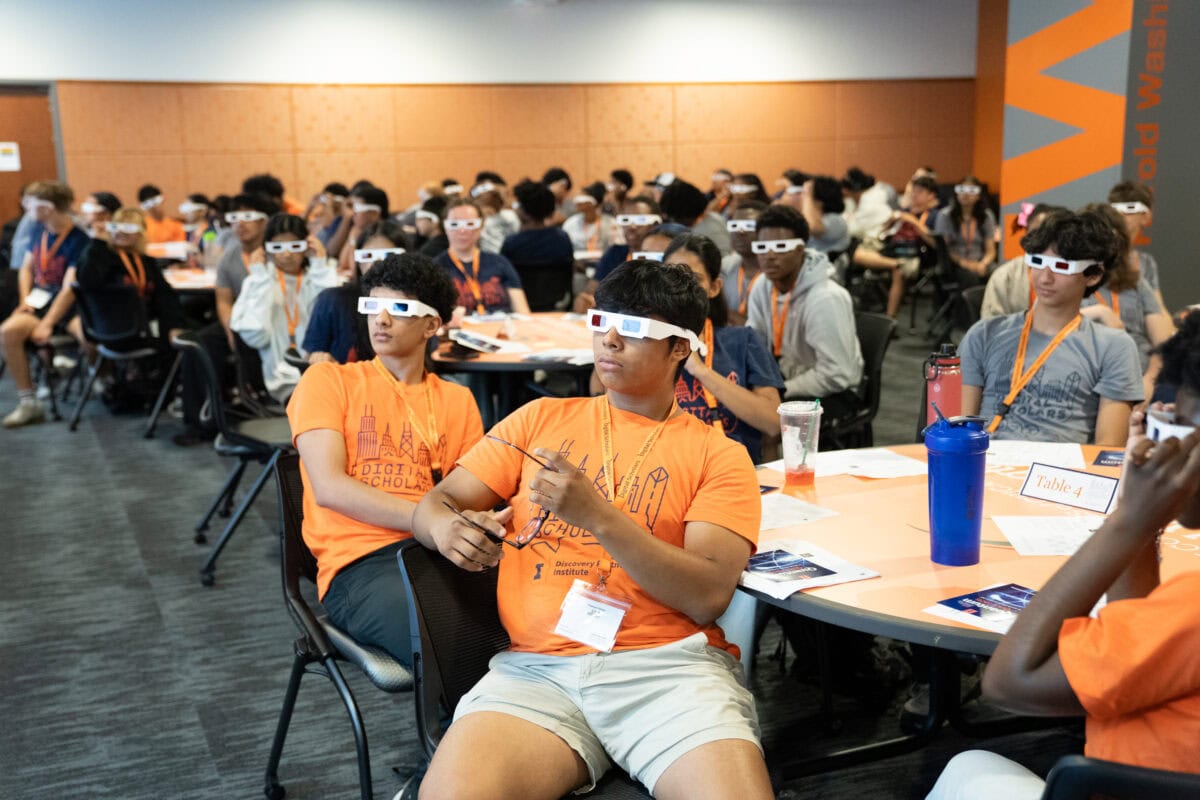
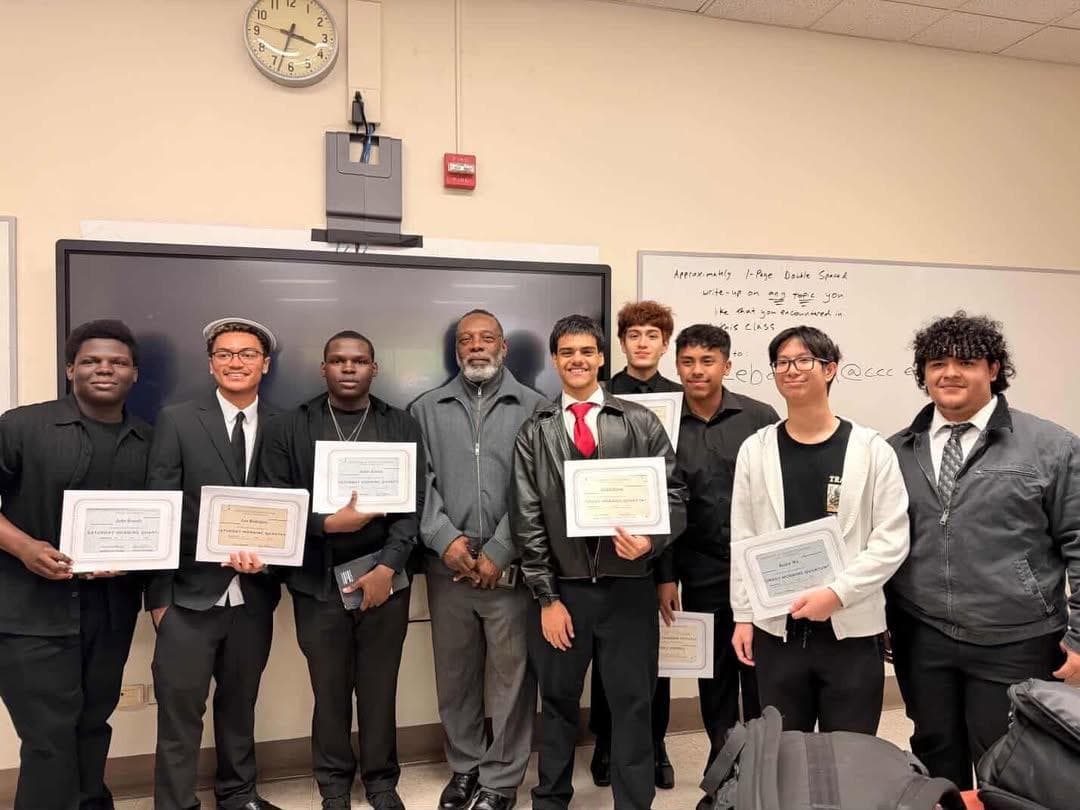
Those opportunities are already beginning to take shape on Chicago’s South Side. IBM recently announced FutureNow Chicago, a center at the IQMP that will bring 750 full-time jobs in AI, cybersecurity, data science and quantum computing to the Park. The IQMP is already working with multiple partners, such as City Colleges and Chicago Public Schools, to build clear pathways for local residents into those careers.
A Strategic Moment for Illinois and South Chicago
The IQMP is designed to be a collaborative space where quantum innovation is nurtured, developed and brought to scale, while the community that surrounds it shares in the opportunity that follows.
“Quantum computing is a next-generation technology that we believe will solve problems that are impossible for supercomputers and do it faster, while using a fraction of the water and energy data centers require,” DeMarco said.
Illinois is uniquely positioned to lead this moment. It is the next chapter for South Chicago – and the future of how humanity will solve some of its most complex challenges.
___________
1 https://thequantuminsider.com/2026/04/14/quantum-vs-classical-computing-guide/
2 https://www.eesi.org/articles/view/data-centers-and-water-consumption
3 https://www.sciline.org/energy/data-center-news/
4 https://www.cnbc.com/2026/02/19/quantum-computing-data-centers-ai-tech-microsoft.html
Publish Date
July 27, 2026
Sign Up for Our Newsletter!