When a problem is so complex that solving it requires expertise from academia, industry, government and national laboratories, it becomes a grand challenge.
To help tackle some of the most pressing scientific and technological challenges facing society, the National Quantum Algorithm Center (NQAC) at the Illinois Quantum and Microelectronics Park (IQMP) launched its Grand Challenges program. The initiative brings together Illinois-based researchers, quantum companies and industry end users to develop quantum applications with real-world impact in areas such as clean energy, power-grid optimization, drug discovery and advanced materials.
We kicked off our Grand Challenges Series with an investigation into Industry Relevant Quantum Algorithms for the Energy Sector. Next, we’re highlighting a team focused on another ambitious energy question: How can quantum computing help scientists design better catalysts—materials capable of speeding up an electrochemical reaction without being used up themselves—for clean-energy technologies?
This project—Quantum Algorithms for Strongly Correlated Metalloporphyrins in Electrocatalysis—brings together IQMP anchor tenant PsiQuantum, the University of Chicago’s Center for Advanced Materials for Environmental Solutions (CAMES) and the materials discovery lab at UL Research Institutes (ULRI), a nonprofit focused on independent safety science and materials research.
The team aims to define a realistic path to using fault-tolerant quantum computing for catalyst research backed by experimental data. To do that, they must develop practical quantum workflows and prove that quantum simulations can produce insights that scientists can test in the lab.
Tackling a Critical Challenge in Clean Energy
Electrocatalysis—which describes the use of a special material to speed up chemical reactions that are driven by electricity—sits at the heart of clean-energy technologies including green hydrogen production, carbon dioxide utilization and fuel-cell operation. The electrocatalysts (a.k.a. specialized materials used in electrolyzers, batteries and fuel cells) that drive these reactions must facilitate complex chemical reactions with precision and efficiency.
The problem is that the catalyst molecules best suited for these reactions contain transition metals whose electron behavior is extraordinarily difficult to model accurately. These are called “strongly correlated systems:” molecules where electrons interact so interdependently that today’s most powerful classical computers can’t capture their behavior without significant error.
“Even small errors in understanding how electrons behave can lead researchers to incorrect conclusions about how a catalyst will perform,” said Laura Gagliardi, a professor at the University of Chicago’s Pritzker School of Molecular Engineering and Department of Chemistry and Co-Director of CAMES.
Quantum algorithms offer a possible long-term route to treating these systems more accurately than classical electronic-structure methods.
This team is building a potential roadmap toward fault-tolerant quantum computers that are error-corrected and capable of running long, reliable calculations to accurately model these systems.
Bringing Together Complementary Expertise
According to Gagliardi, this partnership emerged naturally from longstanding scientific relationships and complementary areas of expertise. The Gagliardi Group at UChicago has previously collaborated with PsiQuantum on quantum algorithms and strongly correlated electronic structure problems; several former members of the research group now work at the company.
At the same time, the Gagliardi Group has maintained ongoing discussions with ULRI’s Materials Discovery Research Institute (MDRI) around catalysis, materials discovery and energy-related chemistry. Shared research interests, along with overlapping scientific networks, helped create a collaborative foundation.
The result is a team with combined expertise in quantum chemistry, quantum algorithms, experimental catalysis and materials discovery working to tackle a problem that no single organization could solve alone.
Building the Foundation for Quantum-Powered Catalyst Discovery
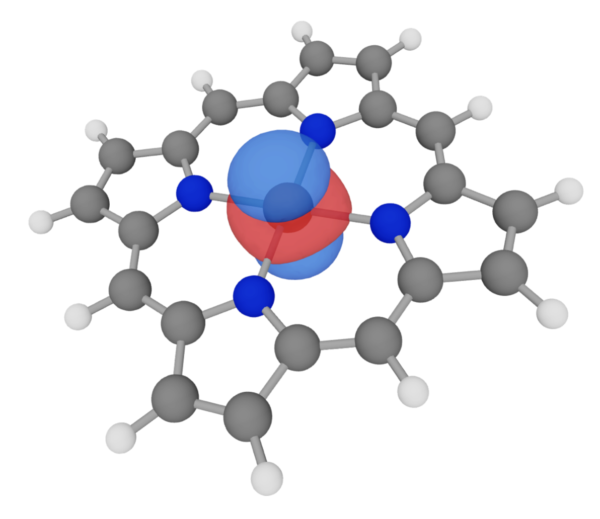
Their research involves pinpointing the most critical electron interactions within metalloporphyrin catalysts—a type of molecule used in many clean-energy reactions. From there, they build a simplified but accurate mathematical model of the molecule that’s small enough for a quantum computer to handle while still capturing the most important chemical behavior. They also calculate exactly how much quantum computing power would be needed to study the molecule at key moments during a reaction—including fleeting, unstable states that exist midway through, after the reaction has started but before it’s finished.
“Today’s computational tools often struggle to capture these subtle electronic effects,” said Sam Pallister, Vice President of Quantum Applications and Software at PsiQuantum. “Quantum computing, however, offers the potential to simulate these strongly correlated electronic states much more accurately than classical methods.”
Equally important, the work isn’t purely theoretical. The team ties their computer simulations directly to real lab measurements from MDRI researchers, ensuring their models reflect what actually happens during a chemical reaction—not just what the math predicts.
Why It Matters
If successful, this work could fundamentally change how new catalysts are discovered and developed, making the process faster and lab-ready.
“Rather than relying heavily on costly and time-consuming experimental trial and error, researchers could use highly accurate quantum simulations to identify promising catalyst candidates before synthesizing, characterizing and testing those candidates in the laboratory,” said Stuart Miller, Ph.D, Vice President and Executive Director of MDRI.
This approach could accelerate the development of technologies that support sustainable fuel production, carbon dioxide conversion and other critical energy applications.
“The implications extend beyond electrocatalysis,” Miller said. “The methods developed through this project could eventually be applied to a wide range of chemically important materials and reactions that are currently beyond the reach of conventional computational tools.”
Miller continued: “More accurate simulations could accelerate the development of catalysts for sustainable fuel production, carbon dioxide conversion and other energy-relevant transformations.”
More broadly, the project represents an important step toward understanding where quantum computing can deliver meaningful scientific value in chemistry and energy research.
Defining Success
For this team, success means demonstrating a realistic and experimentally grounded pathway toward quantum utility in computational catalysis. That includes developing practical quantum workflows, establishing reliable cost estimates and showing how quantum simulations can generate insights that connect directly to real-world experiments.
If successful, this approach could establish a new paradigm for catalyst discovery in which quantum computing becomes part of an integrated design workflow combining theory, algorithms and experiment.
Gagliardi added: “It also means helping train the next generation of scientists working at the intersection of chemistry, materials science and quantum information science.”
This collaboration exemplifies the power of bringing together Illinois’ growing quantum ecosystem to address complex challenges with the potential for global impact.