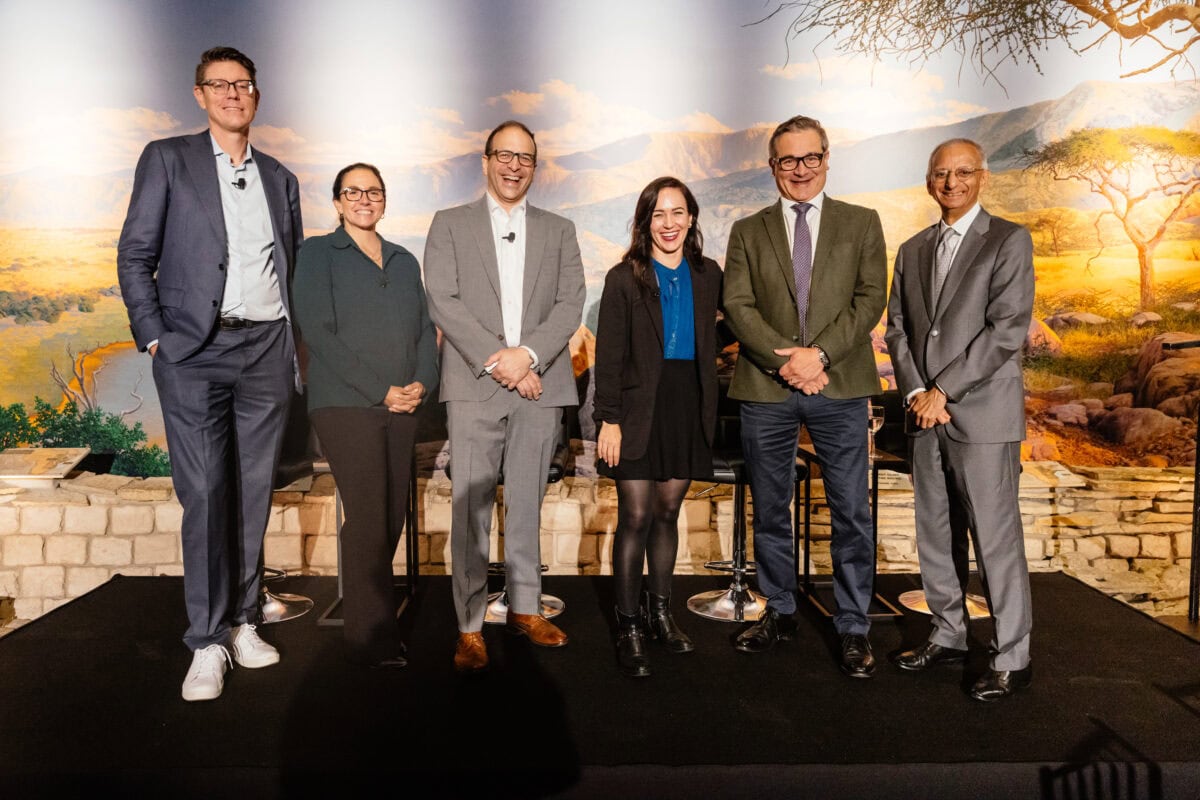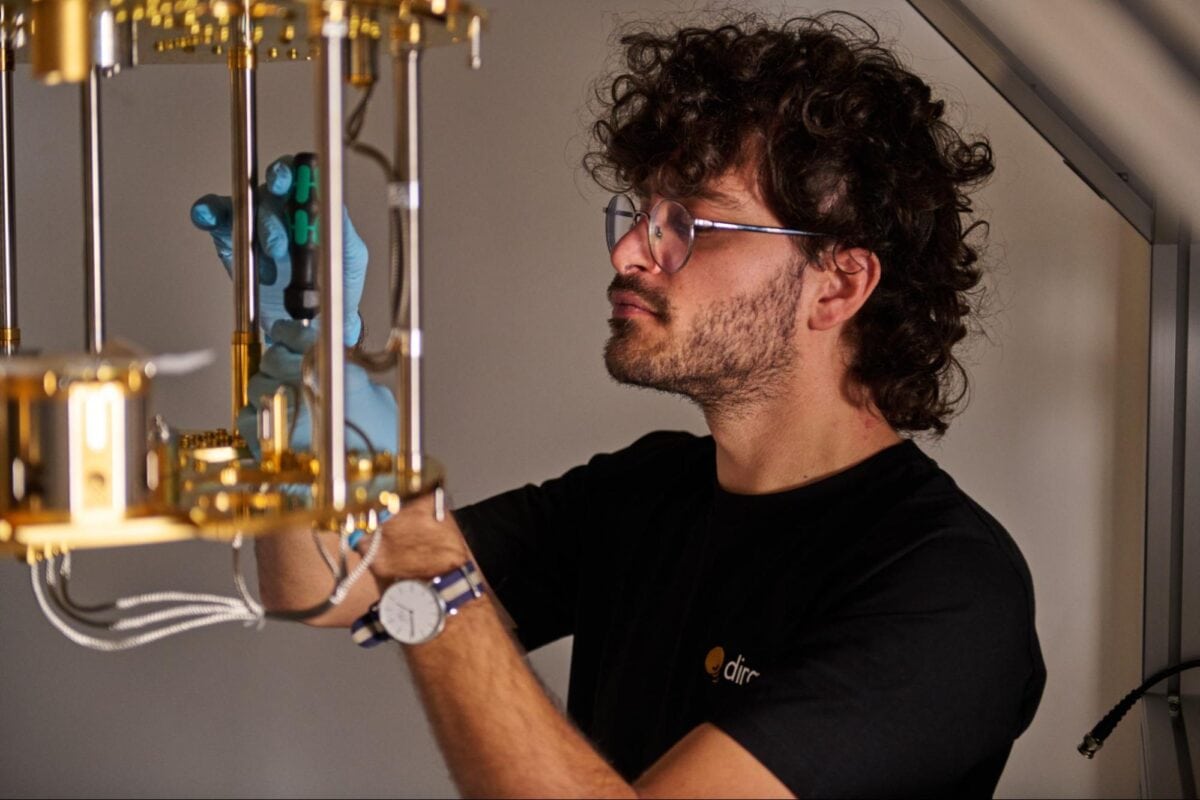
The leaders behind the Illinois Quantum and Microelectronics Park (IQMP) are trailblazers in science, engineering, industry and academia, working together to uncover practical quantum applications and their infinite possibilities.
And yet the idea for the IQMP didn’t start in a boardroom, a classroom or even a lab—it started with two neighbors talking over the fence.
Between family cookouts and casual chats, two University of Illinois at Urbana-Champaign professors — Brian DeMarco, a professor of physics, and Harley Johnson, a professor of mechanical science and engineering — began imagining a campus where quantum technology and microelectronics could grow side‑by‑side, anchored by Illinois’ world‑class research ecosystem and deeply connected to the communities around it.
Those conversations planted a seed that took root and grew into the IQMP, where Harley now serves as CEO and Brian as Chief Technology Officer.
Brian was an early champion of quantum’s real-world potential, but his path to quantum physics wasn’t exactly linear. Art—sculpture and painting in oils and watercolors—was his first love. But when his parents weren’t thrilled about the idea of art school, he decided to follow his second love: quantum physics.
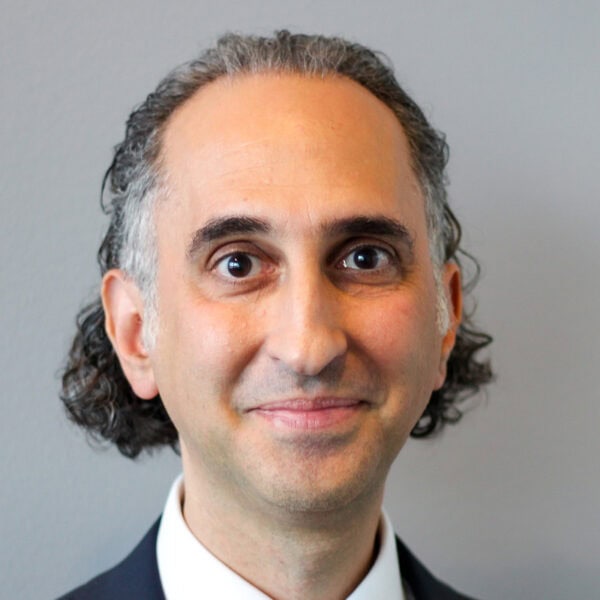
Today, Brian is a leading researcher in quantum information science and technology—and, as he’s quick to point out, also a dad, a husband and “an ordinary guy” who wants people to see science as a human profession, not a caricature.
In our most recent Park Pioneers conversation, Brian shares how the IQMP is strengthening Illinois’ quantum ecosystem by aligning scientific principles and exploration with business development to create a one-of-a-kind campus on Chicago’s South Side.
How would you describe your role with the IQMP?
As Chief Technology Officer, I get to apply decades of experience in quantum information science to help bring the IQMP to life. Because quantum is still an emerging industry, having a deep understanding of the science is essential to attracting businesses, creating jobs and building a thriving quantum economy in Illinois. My work spans across both the Park’s technical infrastructure and business development, where I work closely with the Illinois Economic Development Corporation’s Chief Quantum Officer Preeti Chalsani to recruit companies and grow the state’s’ quantum ecosystem.
Quantum and microelectronics can feel like abstract topics. Why should people care about them?
Microelectronics forms the fabric of everyday life—you just don’t see it. The fact that we can have a video call across the world, navigate with satellites, manufacture medicines, transport food or accurately predict the weather all depends on microelectronics. When I was growing up in the 1970s, much of what we take for granted today felt like something out of The Jetsons (a popular futuristic cartoon). In what is really just a blink of an eye in human history, microelectronics has transformed nearly every aspect of society and built this incredible tapestry of technology that surrounds and supports us every day.
Why should we care about quantum?
Quantum physics is our best understanding of how the world works. It’s why atoms exist, why pharmaceuticals work, why computers function and why my feet don’t fall through the floor. Today, we hide quantum physics inside technologies like computer chips by reducing everything to zeros and ones. Quantum technology is about unhiding that physics and using it directly. Instead of bits, we use qubits, allowing us to solve problems that simply aren’t computable today. Imagine designing a personalized medicine from a single blood sample instead of relying on years of trial and error. That’s the kind of transformation quantum could enable.
When did your research lens shift from physics toward quantum science and technology, and what inspired that shift?
One of the reasons physics captured my imagination is because I recognized there were some things I really didn’t understand—that the physics I knew from high school couldn’t explain. One of those things is the existence of atoms. Without quantum physics, atoms cannot exist. When I went for my PhD in 1996, quantum and information science was becoming a thing. I was really fortunate through my graduate work at the University of Colorado and my postdoc work at the National Institute of Standards and Technology (NIST) in Boulder to contribute to the foundations of the field and help invent different techniques and ways of thinking about things.
What potential application of quantum technology excites or interests you the most?
I’ve always liked working with computers. But I also know as a physicist there are things that I can’t compute with a classical computer for my own research. I know that quantum computing will be able to solve some of those problems.
Tell us about the leadership of the IQMP. How are you and Harley and the broader team working together to bring it to life?
The IQMP requires a wide range of expertise, and that’s what excites me about this leadership team. Everyone brings different perspectives, backgrounds and areas of expertise, and together, the whole is more than the sum of its parts. I’ve known Harley for 20 years, but it’s been fun getting to know the rest of the team and seeing how everyone brings something different to the table. We all share the same goal: to help people, create a new industry and advance a new technology. Having that shared focus and the ability to row in the same direction is really exciting.
You’ve held key positions with several scientific organizations through the years. How does Illinois’s ecosystem compare to others you’ve been a part of?
Illinois has a combination you don’t find everywhere: world-class research institutions, strong government support, engaged civic leaders and major companies that genuinely want to work together. Four of the 10 quantum centers created through the National Quantum Initiative of 2018 are in Illinois, which speaks to the scientific expertise and talent we have in the state. But what has really struck me is how connected everyone is—from universities and government to civic institutions and businesses. There’s a real willingness to roll up our sleeves, work together and make this succeed. I think that’s a Midwestern sensibility.
How do you see the IQMP making an impact?
I think we’re going to be the place where useful, large‑scale quantum computers are made and deployed, and those will be used to change the world for the better.
Lightning Round
- Deep dish or tavern‑style: Neither. New York–style pizza is the only kind of pizza.
- Early bird or night owl: I’m a night owl.
- Favorite class in college: Quantum mechanics.
- If you could have dinner with any one person, living or dead, who would it be: Richard Feynman. He was a Nobel laureate in physics who really changed the way we think about quantum physics. I would love to pick his brain.
- If you had to describe the IQMP in one word, what would it be: Limitless.